Nachricht hinterlassen
Wenn Sie an unseren Produkten interessiert sind und mehr Details erfahren möchten, hinterlassen Sie bitte hier eine Nachricht. Wir werden Ihnen so schnell wie möglich antworten.

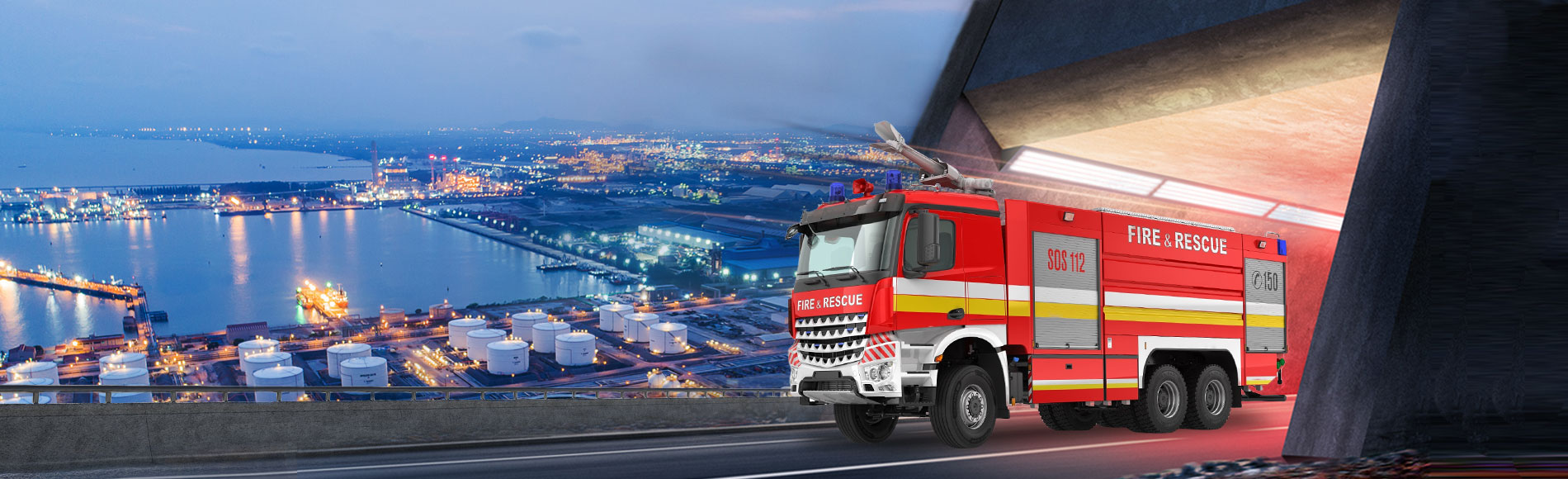
Das Pump- und Sprühsystem eines Feuerwehrautos ist der Kern der Brandbekämpfung. Es fungiert als der „starke Arm“ des Feuerwehrautos. Durch die Umwandlung der Motorleistung in Druck (im Bereich von 0,8 bis 1,4 MPa) liefert es Löschmittel auf Höhen von bis zu 85 Metern — egal, ob es sich um einen Hochhausbrand in einem dicht besiedelten Stadtzentrum oder um einen Brand eines petrochemischen Lagertanks in einer Industriezone handelt, das Feuerwehrauto verlässt sich auf dieses System, um eine wirksame Brandbekämpfung zu erreichen.
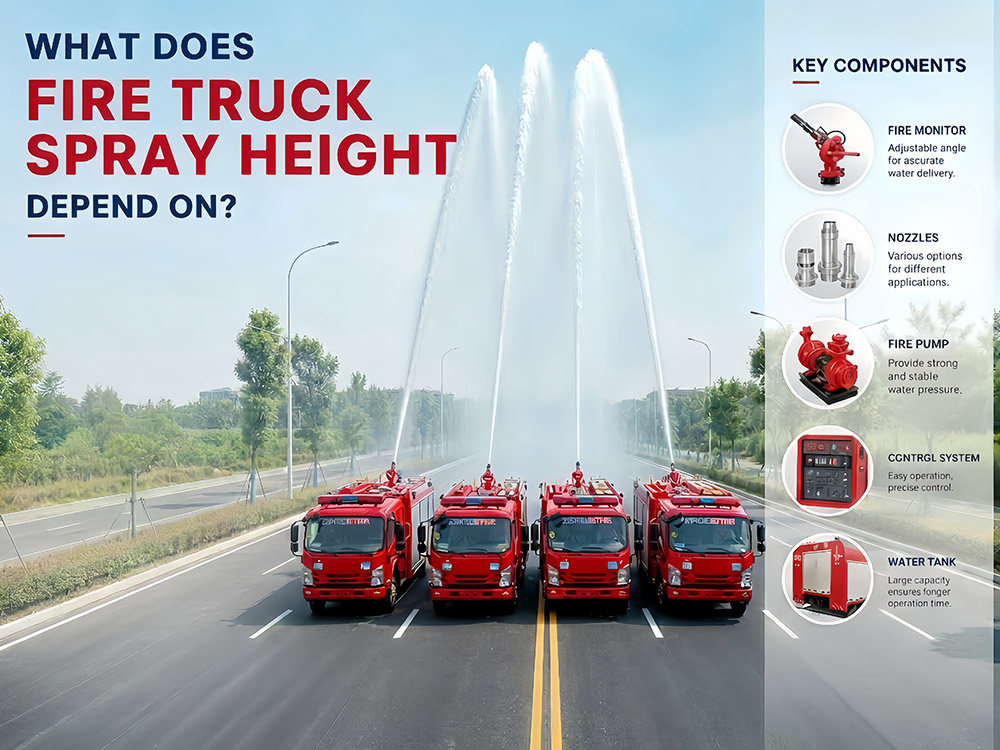
Welche Faktoren beeinflussen die Sprühhöhe eines Feuerwehrautos, und wie arbeiten Pumpendruck, Durchflussrate und Wasserwerfer zusammen? Dies sind die Schwerpunkte vieler Kunden. Lernen wir heute mehr darüber.
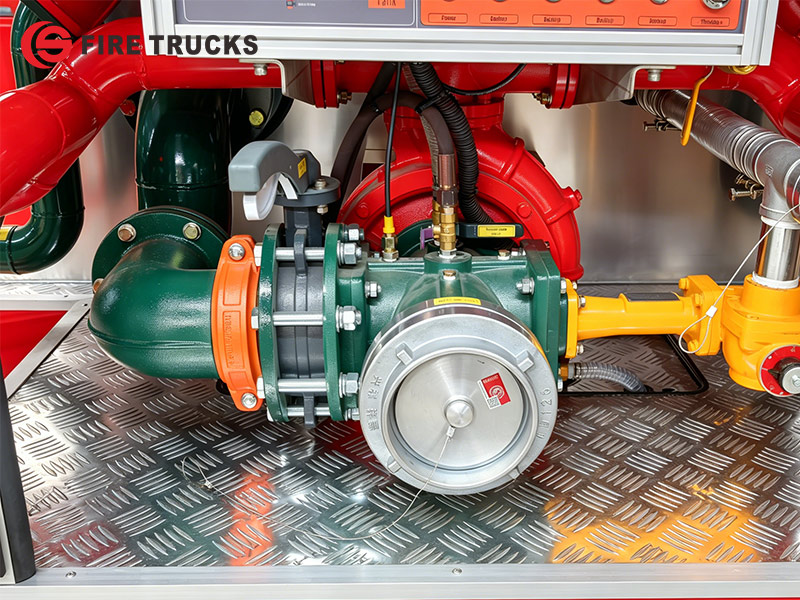
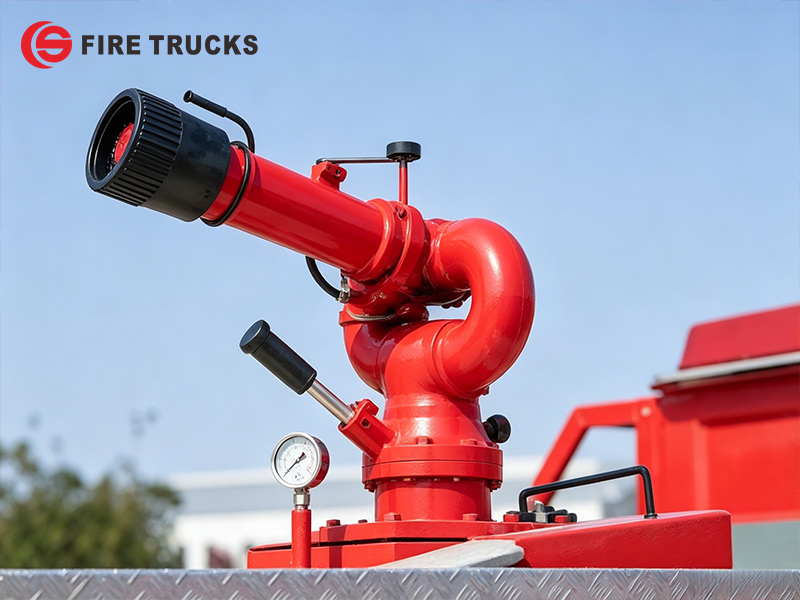
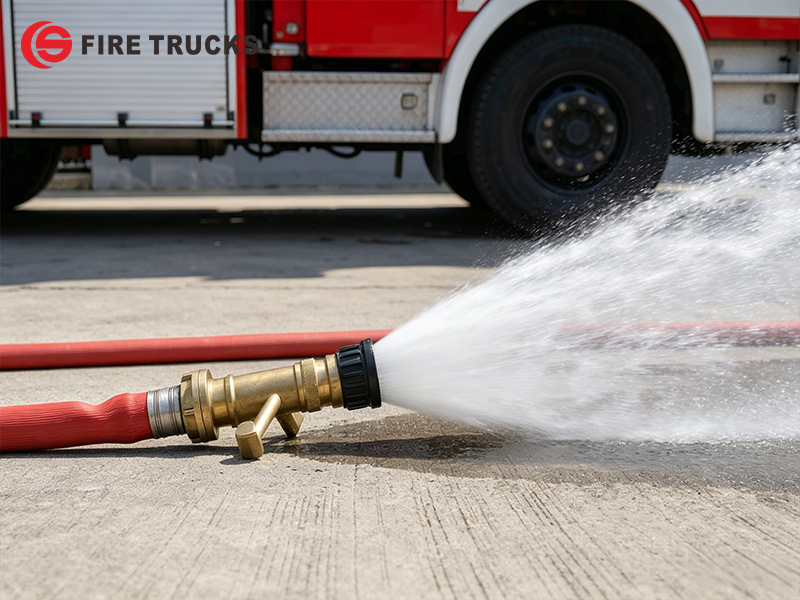
Der Pumpendruck des Feuerwehrautos ist die Kraft, die von der Feuerlöschpumpe erzeugt wird, um das Löschmittel durch Schläuche zu drücken und aus Düsen oder Wasserwerfern auszustoßen. Er ist der wichtigste Faktor für Durchflussrate und Sprühweite. Ein höherer Druck erzeugt eine höhere Geschwindigkeit am Ausgang des Wasserwerfers und erhöht direkt die Sprühhöhe. Der Zusammenhang wird durch die Formel H ≈ P/(ρg) beschrieben, wobei jede Erhöhung um 0,1 MPa theoretisch etwa 10 Meter zusätzliche Höhe ergibt — reale Verluste verringern diesen Wert jedoch.
Bei praktischen Brandbekämpfungseinsätzen gelten folgende Bereiche:
| Pumpendruck | Typische Sprühhöhe |
| 0,8 MPa | 35–45 Meter |
| 1,0 MPa | 45–55 Meter |
| 1,2 MPa | 55–70 Meter |
| 1,4 MPa | 70–85 Meter |
Die Pumpe ist typischerweise eine Kreiselpumpe, die über einen Nebenabtrieb (PTO) vom Motor des Fahrzeugs angetrieben wird. Während sich das Laufrad dreht, saugt es das Löschmittel an und schleudert es durch die Zentrifugalkraft nach außen, wodurch ein Druck entsteht, der es durch das Ausstoßsystem befördert.
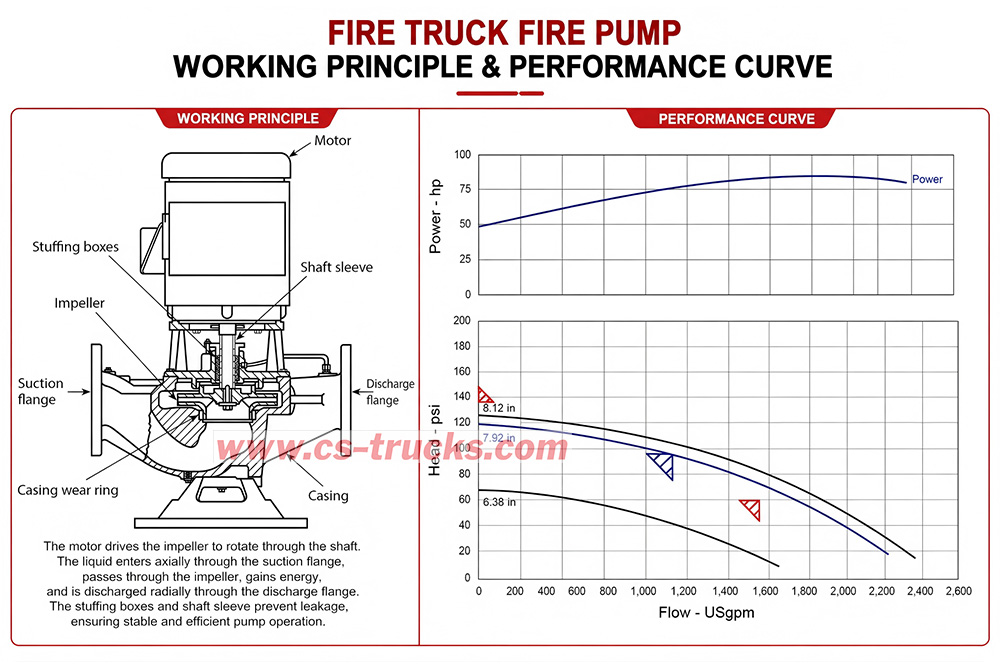 Nenndruck vs. Betriebsdruck:
| Begriff | Definition |
| Nenndruck | Der maximale Druck, den die Pumpe unter Auslegungsbedingungen dauerhaft aufrechterhalten kann |
| Betriebsdruck | Der tatsächliche Druck, der während der Brandbekämpfung verwendet wird, typischerweise niedriger als der Nenndruck, um eine Reserve zu gewährleisten |
Eine ausreichende Durchflussmenge ist ebenso wichtig wie der Druck. Hoher Druck bei geringer Durchflussmenge kann nicht genügend Löschmittel liefern, um einen Brand zu unterdrücken. Das Pumpensystem muss gleichzeitig Druck und Durchfluss aufrechterhalten.
Durchflussmenge vs. Sprühhöhe:
2.000 L/min → effektiv für kommunale Brände
3.000 L/min → geeignet für Industrieparks
4.000 L/min → erforderlich für petrochemische Anlagen
5.000+ L/min → notwendig für Flughafen-Katastrophenrettung
Der interne Strömungsweg, der Auslassdurchmesser und der Typ des Monitors beeinflussen direkt die Sprühhöhe.
Vergleich der Monitortypen:
Wassermonitor: größte Höhe, gerader Strömungsweg
Schaummonitor: etwas geringer (5–10 % weniger) aufgrund von Turbulenzen bei der Luftaufnahme
Doppelfunktionsmonitor: mittelmäßig (Kompromiss zwischen Wasser und Schaum)
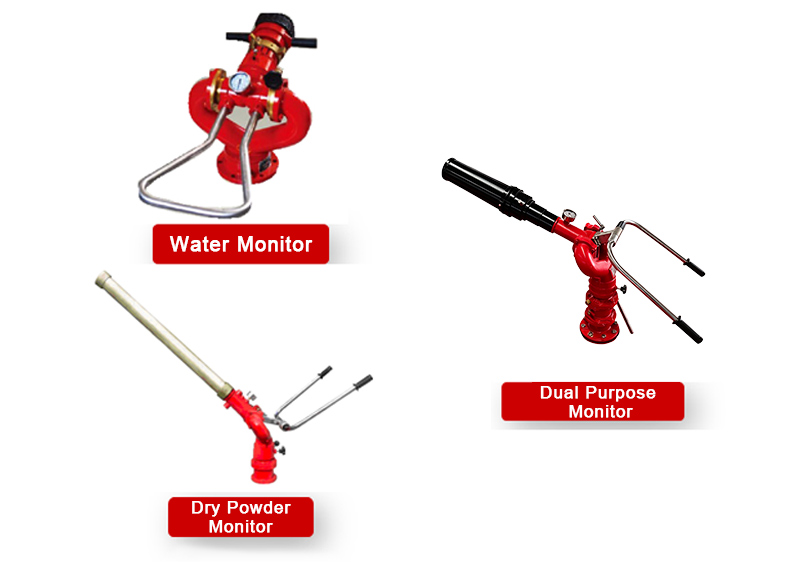
Wasser und Schaum haben unterschiedliche Dichten. Schaumlösung ist ungefähr 5–10 % dichter als Wasser, wodurch die Sprühhöhe bei gleichem Druck leicht reduziert wird. Dies sollte bei der Auswahl der Ausrüstung für Schaumeinsätze berücksichtigt werden.
Wenn das Löschmittel durch Schläuche und Rohrleitungen fließt, reduziert Reibung den Druck am Monitor. Längere Schläuche und kleinere Durchmesser erhöhen die Verluste.
Faktoren für den Reibungsverlust:
Schlauchlänge: Länger = mehr Verlust
Schlauchdurchmesser: Kleiner = mehr Verlust
Armaturen und Bögen: Jeder erhöht den Widerstand
Um Kunden die besten Brandschutzlösungen bereitzustellen, wählt FIRE TRUCKS das am besten geeignete System basierend auf den Anwendungs-
anforderungen aus: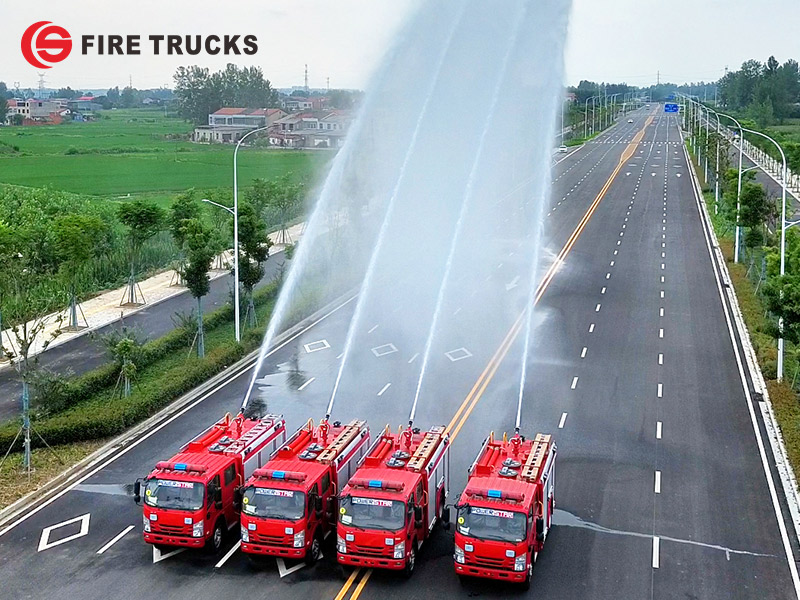
| Pumpendruck | Durchflussrate | Sprühhöhe | Empfohlene Anwendung |
| 0,8 MPa | 2.000 L/min | 35–45 m | Kommunale Brandbekämpfung |
| 1,0 MPa | 3.000 L/min | 45–55 m | Industrieparks |
| 1,2 MPa | 4.000 L/min | 55–70 m | Petrochemische Anlagen |
| 1,4 MPa | 5.000+ L/min | 70–85 m | Flughafenfeuerbekämpfung |
| Anwendung | Empfohlener Werfertyp | Grund |
| Kommunale Brandbekämpfung | Wasserwerfer | Höchste Sprühhöhe, einfache Bedienung |
| Ölraffinerie/Chemiewerk | Schaumwerfer oder Mehrzweckwerfer | Bewältigt Brände mit brennbaren Flüssigkeiten |
| Flughafen-Unfallrettung | Schaumwerfer (hohe Kapazität) | Großes Schaumvolumen erforderlich |
| Gemischte Brandrisiken | Mehrzweckwerfer | Flexibilität für Wasser und Schaum |
| Faktor | Auswirkung | Optimierung |
| Pumpendruck | Direkt proportional | Geeigneten Druck für die Anwendung auswählen |
| Durchflussrate | Hält die Brandbekämpfung aufrecht | Druck und Durchfluss ausbalancieren |
| Werferdesign | Bis zu 10 % Abweichung | Werfertyp an die Anwendung anpassen |
| Löschmitteltyp | Schaum verringert die Höhe geringfügig | Dichteunterschied berücksichtigen |
| Reibungsverlust | Verringert den effektiven Druck | Kürzere/größere Schläuche verwenden |
| Höhenzunahme | Verbraucht Druck | Zusätzlichen Druck für die Höhe hinzufügen |
| Windgeschwindigkeit | Reduziert die effektive Höhe | Feuerwehrfahrzeug windaufwärts positionieren |
Fallhintergrund:
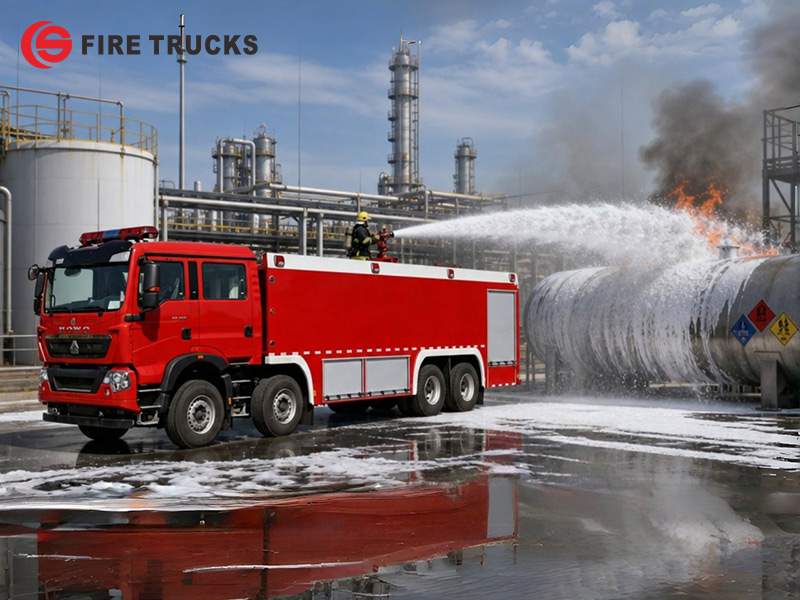
In einer petrochemischen Lagereinrichtung in einem Industriegebiet brach ein großflächiger Brand aus. Der Brand betraf einen Schwimmdachtank mit einem Durchmesser von 50 Metern, der Rohöl enthielt. Bodenbasierte Schläuche konnten den Brand aufgrund der Höhe des Tanks und der Zone mit Wärmestrahlung nicht erreichen.
Konfiguration des Feuerwehrfahrzeugs:
8×4-Schaumfeuerwehrfahrzeug
Pumpensystem mit einer Leistung von 1,2 MPa / 4.000 L/min
PL48 Schaummittel-/Wasser-Zweizweckmonitor
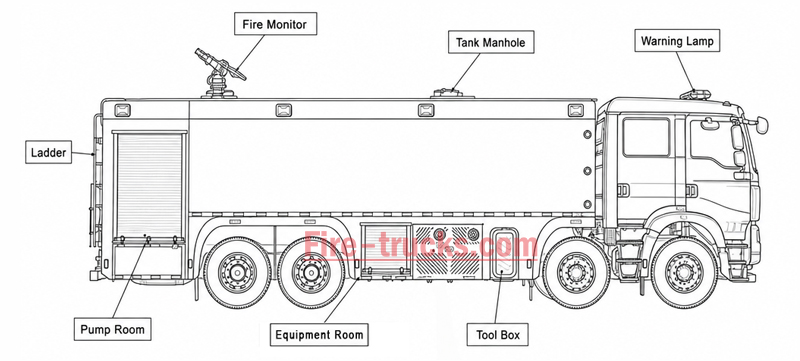
Tatsächliche Leistung:
Gemessene Sprühhöhe: ungefähr 62 Meter
Effektive Abdeckung: Tankbereich mit einem Durchmesser von ungefähr 80 Metern
Die Schaumschicht unterdrückte den Brand erfolgreich innerhalb von 8 Minuten
Wichtige Erkenntnis:
Bei Bränden großer Lagertanks sind Drücke unter 1,0 MPa häufig nicht ausreichend, um Schaum über die erforderliche Entfernung zu bringen. Die Kombination aus ausreichendem Druck, hoher Durchflussmenge und einem passend ausgewählten Monitor ist entscheidend für eine wirksame Brandbekämpfung.
Missverständnis 1: Höherer Druck ist immer besser
Realität:Höherer Druck erhöht den Energieverbrauch, die Gerätekosten und die Komplexität der Wartung. Übermäßiger Druck kann außerdem Schläuche und Düsen beschädigen. Ziel ist ein für die Aufgabe ausreichender Druck, nicht der maximale Druck.
Missverständnis 2: Sprühhöhe entspricht der Brandbekämpfungsfähigkeit
Realität:Die Durchflussmenge ist oft wichtiger als die Höhe. Ein hoher Strahl mit geringer Durchflussmenge liefert möglicherweise nicht genügend Löschmittel, um einen Brand zu unterdrücken. Entscheidend ist der kombinierte Wert aus Druck und Durchfluss.
Missverständnis 3: Reibungsverluste können ignoriert werden
Realität:Bei langen Schlauchleitungen können Reibungsverluste 20–30 % des Pumpendrucks aufbrauchen. Eine korrekte Berechnung der Reibungsverluste ist entscheidend, um einen ausreichenden Druck an der Düse sicherzustellen.
Missverständnis 4: Der Monitor macht keinen Unterschied
Realität:Eine Hochdruckpumpe, die mit einem schlecht konstruierten Monitor verbunden ist, erreicht nicht die maximale Sprühhöhe. Der interne Strömungsweg des Monitors, der Auslassdurchmesser und der Typ beeinflussen alle die endgültige Leistung. Die Abstimmung des Monitors auf die Pumpe ist ebenso wichtig wie die Auswahl der Pumpe selbst.
F: Was ist der häufigste Pumpendruck bei Feuerwehrfahrzeugen?
A: Die meisten Feuerwehrfahrzeuge sind mit Pumpendrücken im Bereich von 0,8 bis 1,2 MPa ausgelegt, wobei 1,0 MPa der häufigste Standard ist.
F: Wie hoch kann eine 1,0-MPa-Pumpe sprühen?
A: Unter Standardbedingungen kann eine 1,0-MPa-Pumpe mit einem mittleren bis großen Monitor Sprühhöhen von 45 bis 55 Metern erreichen.
F: Warum erfordern Brände in Hochhäusern einen höheren Pumpendruck?
A: Brände in Hochhäusern erfordern zusätzlichen Druck, um den Höhenunterschied (1,0 m Höhe erfordert ungefähr 0,01 MPa) und Reibungsverluste in vertikalen Schlauchleitungen zu überwinden.
F: Erreicht ein Schaummonitor die gleiche Sprühhöhe wie ein Wassermonitor?
A: Typischerweise erreichen Schaummonitore aufgrund der Lufteinlasskonstruktion, die Turbulenzen erzeugt, und der höheren Dichte der Schaumlösung bei gleichem Druck etwas geringere Höhen (5–10 % weniger) als Wassermonitore.
F: Welcher ist der wichtigste Faktor für die Wurfweite?
A: Kein einzelner Faktor bestimmt die Wurfweite. Pumpendruck, Durchflussmenge, Monitorkonstruktion, Düsentyp und Umgebungsbedingungen wirken alle zusammen. Ein gut abgestimmtes System ist effektiver als eines, das nur in einem Bereich hervorragende Leistungen erbringt.
F: Beeinflusst der Monitor selbst die Wurfweite?
A: Ja. Der interne Strömungsweg des Monitors, der Auslassdurchmesser und der Typ (Wasser, Schaum oder Doppelzweck) beeinflussen die Wurfweite direkt. Ein gut konstruierter Monitor maximiert die von der Pumpe gelieferte Energie.
Die Wurfweite hängt von mehreren Faktoren ab — Pumpendruck, Durchflussmenge, Monitorkonstruktion, Löschmitteltyp, Reibungsverlust, Höhenlage und Windbedingungen
1,0–1,2 MPa ist der übliche Druckbereich für die meisten industriellen Feuerwehranwendungen
Die Auswahl des Monitors ist entscheidend — eine Hochdruckpumpe mit einem schlecht konstruierten Monitor erreicht nicht die maximale Wurfweite
Die Durchflussmenge ist ebenso wichtig wie der Druck — hoher Druck bei geringem Durchfluss kann dazu führen, dass nicht genügend Löschmittel zur Brandbekämpfung bereitgestellt wird
Unterschiedliche Löschmittel haben unterschiedliche Sprüheigenschaften — Schaum ist dichter und erreicht eine etwas geringere Höhe
Petrochemische Anlagen und Flughafenprojekte erfordern typischerweise 1,2 MPa oder mehr
Bei internationalen Projekten sollten Feuerlöschfahrzeuge bevorzugt werden, die anerkannten Standards wie NFPA, EN oder GB entsprechen
Die Wurfweite eines Feuerlöschfahrzeugs wird nicht durch einen einzelnen Faktor bestimmt. Sie hängt von der kombinierten Wirkung von Pumpendruck, Durchflussmenge, Monitorkonstruktion, Löschmitteltyp, Reibungsverlust, Höhenunterschied und Windbedingungen ab.


Möglicherweise interessieren Sie sich für die folgenden Informationen
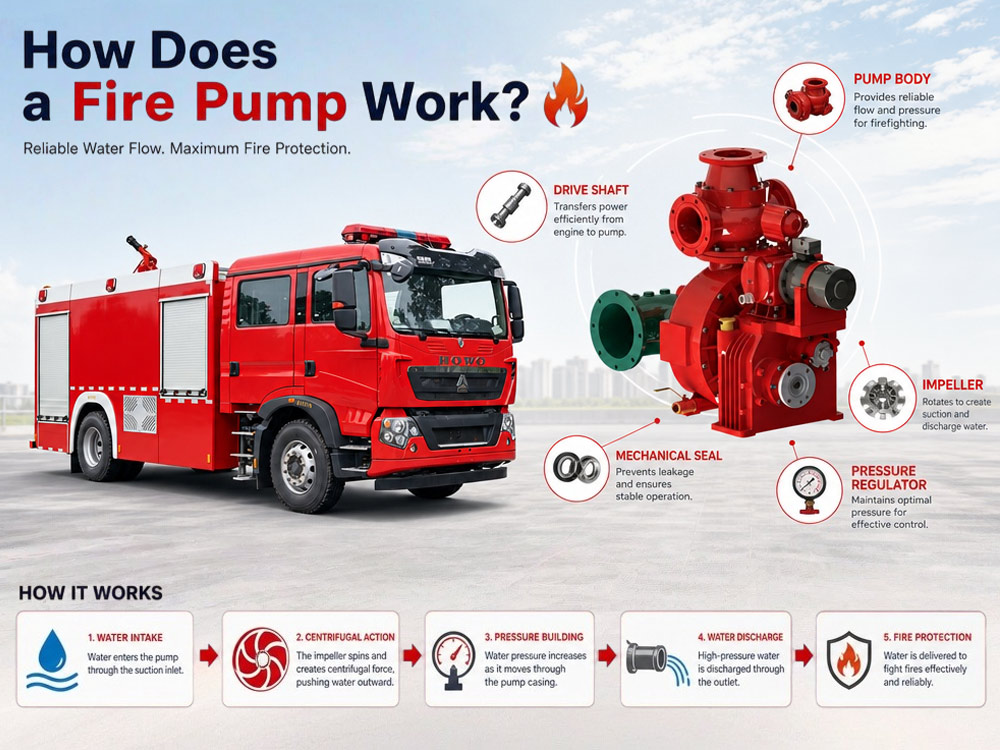
Eine Feuerlöschpumpe ist das Herzstück des Wasserfördersystems jedes Feuerwehrautos. Ob bei einem Gebäudebrand, einem Industrie-Notfall, einem Flughafenzwischenfall oder einem Waldbrand-Einsatz – die Feuerlöschpumpeauf einem Feuerwehrauto ist dafür verantwortlich, Hochdruckwasser zu Schläuchen, Wasserwerfern und Schaumsystemen zu fördern.Ihr Zentrifugal-Laufraddesign und das durch die Zapfwelle angetriebene System gewährleisten stabilen Druck und hohe Durchflussraten, wodurch die Effektivität der Brandbekämpfung direkt um über 40 % gesteigert wird, während die Reaktionszeit um das 3-Fache reduziert wird. Sie kann als unsichtbarer Schutzwächter der Brandbekämpfungseinsätze und als technischer Eckpfeiler moderner Notfallreaktionen bezeichnet werden. Erfahren Sie, wie eine Feuerlöschpumpe funktioniert, einschließlich ihres Funktionsprinzips, der wichtigsten Komponenten, des Wasserflussprozesses, der Druckerzeugung und der Anwendungen. Entdecken Sie, wie Feuerwehrauto-Pumpen eine zuverlässige Wasserversorgung für die Brandbekämpfung gewährleisten und wie Sie die richtige Pumpe für Ihr Feuerwehrfahrzeug auswählen.Lernen wir es heute kennen. » I. Zunächst müssen wir die drei Hauptkomponenten des Feuerlöschpumpensystems kennen: 1. Laufrad: Die rotierende Komponente, die Wasser ansaugt und es durch Zentrifugalkraft nach außen schleudert. Typischerweise aus Bronze, Edelstahl oder Gusseisen gefertigt. 2. Pumpengehäuse: Das Gehäuse, das das Laufrad enthält und den Wasserfluss leitet. Es ist dafür ausgelegt, Geschwindigkeit in Druck umzuwandeln. 3. Zapfwelle (PTO): Die mechanische Verbindung, die die Motorleistung vom Getriebe des Feuerwehrautos zur Feuerlöschpumpe überträgt. » II. Nach Kenntnis der Hauptkomponenten lautet das grundlegende Funktionsprinzip der Feuerlöschpumpe wie folgt: 1. Die Kraft wird über die Zapfwelle vom Motor übertragen Der Motor des Feuerwehrautos treibt die Zapfwelle an, die mit der Pumpenwelle verbunden ist. Wenn der Bediener die Zapfwelle einschaltet, wird die Motorleistung umgeleitet, um das Pumpenlaufrad mit hoher Geschwindigkeit anzutreiben. 2. Das Laufrad beginnt sich zu drehen Das Laufrad dreht sich mit 1.500–2.500 U/min und saugt Wasser durch den Ansaugeinlass in die Pumpe. Die rotierenden Laufradschaufeln erzeugen im Zentrum eine Niederdruckzone, wodurch Wasser aus dem Bordtank, dem Hydranten oder einer natürlichen Wasserquelle angesaugt wird. 3. Zentrifugalkraft erhöht den Wasserdruck Während sich das Laufrad dreht, schleudert es Wasser durch Zentrifugalkraft nach außen. Die Geschwindigkeit des Wassers nimmt zu, während es sich vom Zentrum zur Außenkante des Laufrads bewegt. Das Pumpengehäuse wandelt diese Geschwindigkeit anschließend in Druck um und drückt das Hochdruckwasser durch den Druckauslass nach außen. 4. Hochdruckwasser tritt aus dem Druckauslass aus Druckbeaufschlagtes Wasser (typischerweise 0,8–1,2 MPa) tritt durch den Druckauslass aus und wird für Brandbekämpfungseinsätze zu Feuerwehrschläuchen, Wasserwerfern ...
Details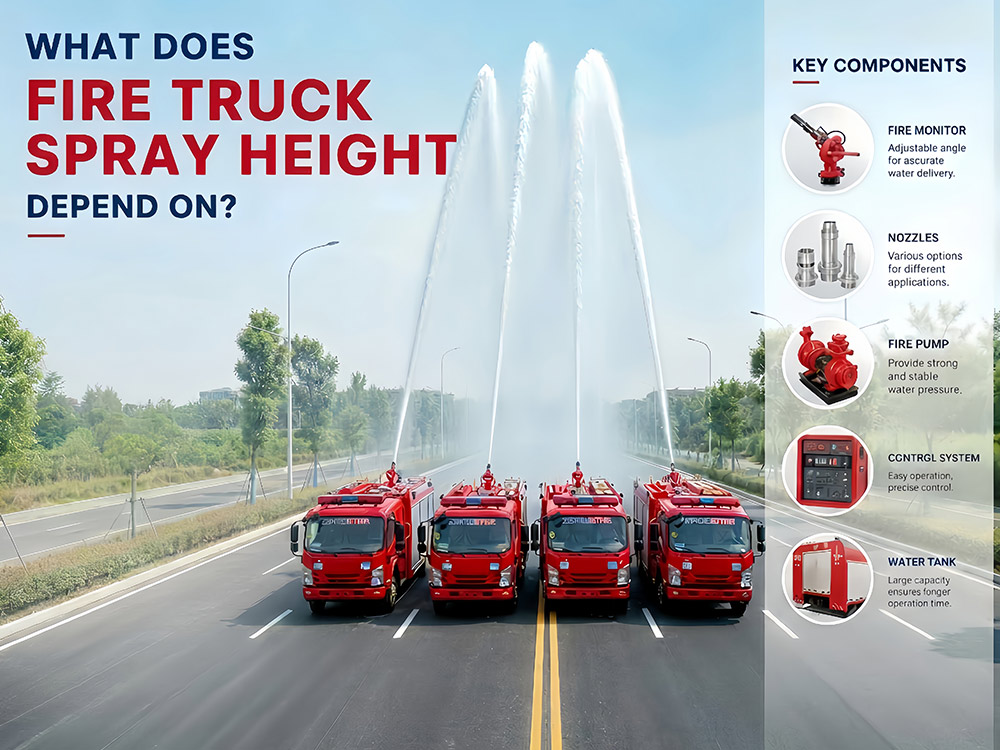
Das Pump- und Sprühsystem eines Feuerwehrautos ist der Kern der Brandbekämpfung. Es fungiert als der „starke Arm“ des Feuerwehrautos. Durch die Umwandlung der Motorleistung in Druck (im Bereich von 0,8 bis 1,4 MPa) liefert es Löschmittel auf Höhen von bis zu 85 Metern — egal, ob es sich um einen Hochhausbrand in einem dicht besiedelten Stadtzentrum oder um einen Brand eines petrochemischen Lagertanks in einer Industriezone handelt, das Feuerwehrauto verlässt sich auf dieses System, um eine wirksame Brandbekämpfung zu erreichen. Welche Faktoren beeinflussen die Sprühhöhe eines Feuerwehrautos, und wie arbeiten Pumpendruck, Durchflussrate und Wasserwerfer zusammen? Dies sind die Schwerpunkte vieler Kunden. Lernen wir heute mehr darüber. » I. Drei Schlüsselkomponenten, die die Sprühhöhe bestimmen 1. Feuerlöschpumpensystem: Das Herz des Feuerwehrautos. Kreiselpumpe, angetrieben durch einen Nebenabtrieb (PTO). Übliche Druckstufen: 0,8 MPa, 1,0 MPa, 1,2 MPa, 1,4 MPa. Durchflussraten von 2.000 bis über 5.000 L/min. 2. Wasserwerfer: Die letzte Komponente, bevor das Löschmittel das Fahrzeug verlässt. Erhältlich als Wasserwerfer, Schaummonitor und Kombinationsmonitor. Die PL-Serie (PL48) mit Durchflussraten von bis zu 4.000 L/min und einer Sprühhöhe von über 70 Metern. 3. Fördersystem: Rohrleitungen, Schläuche und Düsen, die das Löschmittel von der Pumpe zum Wasserwerfer transportieren. Schlauchdurchmesser, Länge und Düsentyp beeinflussen alle die endgültige Sprühhöhe. » II. Kernfaktoren, die die Sprühhöhe bestimmen 1.1. Pumpendruck Der Pumpendruck des Feuerwehrautos ist die Kraft, die von der Feuerlöschpumpe erzeugt wird, um das Löschmittel durch Schläuche zu drücken und aus Düsen oder Wasserwerfern auszustoßen. Er ist der wichtigste Faktor für Durchflussrate und Sprühweite. Ein höherer Druck erzeugt eine höhere Geschwindigkeit am Ausgang des Wasserwerfers und erhöht direkt die Sprühhöhe. Der Zusammenhang wird durch die Formel H ≈ P/(ρg) beschrieben, wobei jede Erhöhung um 0,1 MPa theoretisch etwa 10 Meter zusätzliche Höhe ergibt — reale Verluste verringern diesen Wert jedoch. Bei praktischen Brandbekämpfungseinsätzen gelten folgende Bereiche: Pumpendruck Typische Sprühhöhe 0,8 MPa 35–45 Meter 1,0 MPa 45–55 Meter 1,2 MPa 55–70 Meter 1,4 MPa 70–85 Meter 1.2. Funktionsweise der Feuerlöschpumpe: Die Pumpe ist typischerweise eine Kreiselpumpe, die über einen Nebenabtrieb (PTO) vom Motor des Fahrzeugs angetrieben wird. Während sich das Laufrad dreht, saugt es das Löschmittel an und schleudert es durch die Zentrifugalkraft nach außen, wodurch ein Druck entsteht, der es durch das Ausstoßsystem befördert. Nenndruck vs. Betriebsdruck: Begriff Definition Nenndruck Der maximale Druck, den die Pumpe unter Auslegungsbedingungen dauerhaft aufrechterhalten kann Betriebsdruck Der tatsächliche Druck, der während der Brandbekämpfung verwendet wird, typischerweise niedriger als der Nenndruck, um eine Reserve zu gewährleisten 2. Durchflussrate (L/min) Eine ausreichende Du...
Details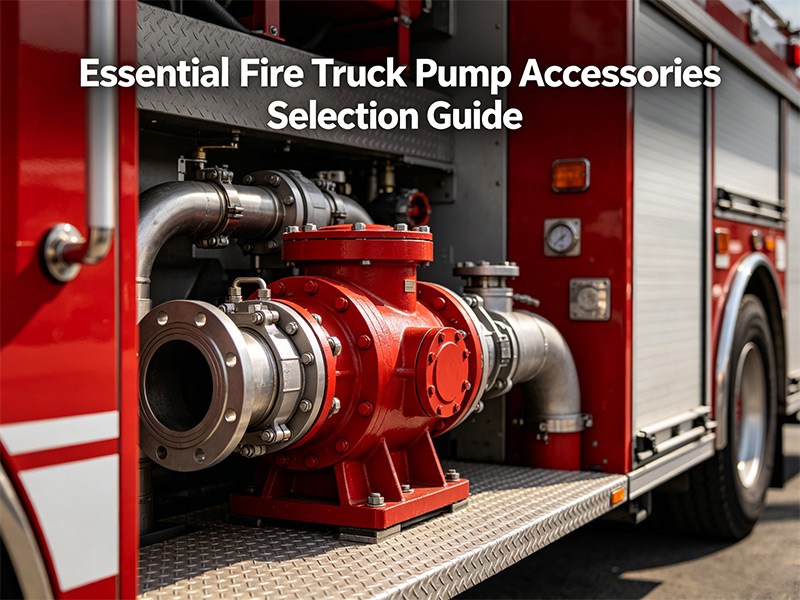
Ein Pumpensystem eines Feuerwehrfahrzeugs ist nur so zuverlässig wie seine Komponenten. Vom Ansaugen von Wasser aus einer Quelle bis zur Abgabe mit hohem Druck spielt jedes Zubehörteil eine entscheidende Rolle. Dieser Leitfaden behandeltFeuerwehrfahrzeug fünf wichtige Zubehörkategorien: Entlüfter, Kugelhähne, Absperrventile, Schaummittelzumischer und hydraulische Steuerungssysteme. Das Verständnis dieser Komponenten hilft Feuerwehrleuten, ihre Ausrüstung zu warten und die richtigen Zubehörteile für bestimmte Anwendungen auszuwählen. I. Entlüfter-Serie (Vakuum-Ansaugvorrichtungen) Entlüfter sind unerlässlich, um Wasser aus Seen, Flüssen oder anderen statischen Quellen anzusaugen, wenn kein Hydrant verfügbar ist. Sie entfernen Luft aus der Pumpe und dem Saugschlauch, sodass der atmosphärische Druck Wasser in die Pumpe drücken kann. Produktübersicht Produkt Maximales Vakuum Spannung Leistung Geeignete Pumpengröße 2-Kolben-Entlüfter >85 kPa 24 V - Unter 100 L/s Elektrischer 2-Kolben-Entlüfter >85 kPa 24 V 2,1 KW Unter 100 L/s 4-Kolben-Entlüfter >85 kPa 24 V - Über 100 L/s Elektrischer 4-Kolben-Entlüfter >85 kPa 24 V 2,1 KW Über 100 L/s Hauptmerkmal: Elektrische Entlüfter Elektrische Entlüfter bieten einen entscheidenden Vorteil — sie können die Pumpe entlüften, ohne dass sich die Pumpe dreht. Dies schützt die Gleitringdichtung vor Schäden durch Trockenlauf. Während ein herkömmlicher Entlüfter eine Drehung der Pumpe erfordert, arbeitet die elektrische Version unabhängig und verlängert dadurch die Lebensdauer der Dichtung. II. Kugelhahn-Serie (Durchflussregelung) Kugelhähne steuern den Wasserfluss durch Schläuche und Auslassöffnungen. Sie sind für eine schnelle Ein-/Aus-Bedienung mit einer einfachen 90°-Drehung ausgelegt. Edelstahl-Kugelhähne Modell Material Nenndruck Gewinde Bedienung FQS65/2.5 Körper & Kugel: Edelstahl 304; Dichtung: PTFE 2.5 MPa G2-1/2" Handrad / Hebel FQS80/2.5 Körper & Kugel: Edelstahl 304; Dichtung: PTFE 2.5 MPa G3" Handrad / Hebel Kugelhähne aus Aluminiumlegierung (geringeres Gewicht) Modell Material Nenndruck Gewinde Bedienung FQS65/2.5 Körper: A356.2; Kugel: 304; Dichtung: PTFE 2.5 MPa G2.5" Handrad / Hebel FQS80/1.6 Körper: A356.2; Kugel: 304; Dichtung: PTFE 1.6 MPa G3" Handrad / Hebel FQS65/2.5 Vierkant Körper: A356.2; Kugel: 304; Dichtung: PTFE 2.5 MPa - Pneumatisch / Hebel Ⅲ. Durchgangsventil-Serie (Druck- & Durchflussregelung) Im Gegensatz zu Kugelhähnen, die für den Ein-/Aus-Betrieb ausgelegt sind, ermöglichen Durchgangsventile eine präzise Steuerung von Durchflussmenge und Druck. Sie sind ideal für Situationen, in denen eine schrittweise Anpassung erforderlich ist. Modell Material Nenndruck Gewinde Bedienung DN65/2,5 Gehäuse: A356.2; Spindel: H62; Dichtung: NBR 2,5 MPa G2,5" Handrad DN80/2,5 Gehäuse: A356.2; Spindel: H62; Dichtung: NBR 2,5 MPa G3" Handrad Wann ein Globusventil verwenden Verwenden Sie Globusventile an Auslasspunkten, an denen eine feine Druckregelung erford...
Details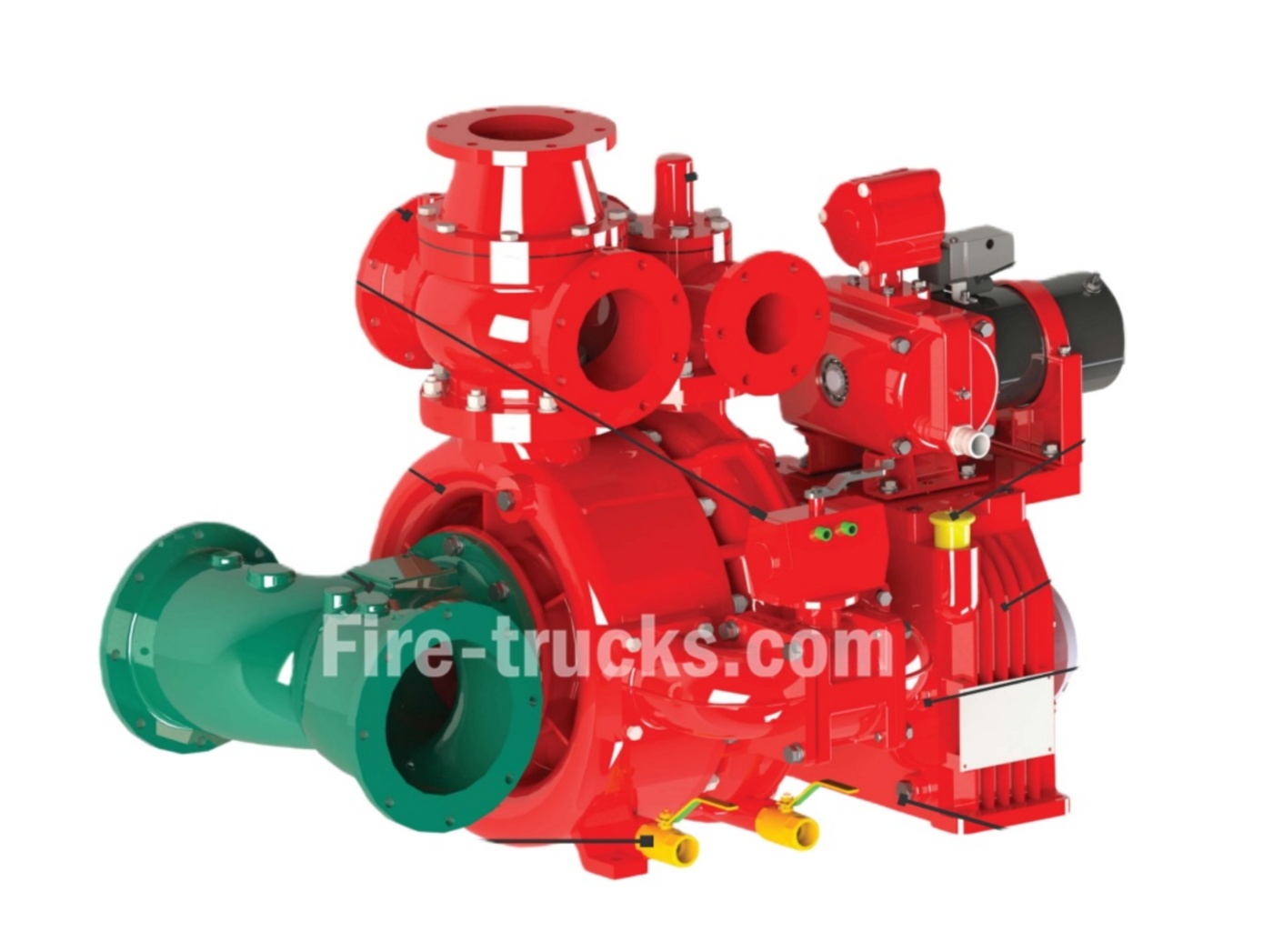
Als professioneller Xiongzhen Hersteller von Feuerlöschpumpen in China, Powerstar Trucks Das Unternehmen besitzt die Eigenmarke „Xiongzhen“ und bietet eine Produktreihe an, die Niederdruck-, Mittel-Niederdruck- und Hoch-Niederdruck-Fahrzeugfeuerlöschpumpen sowie Zubehör wie Löschmonitore und Schaummittelzumischer umfasst. Die Feuerlöschpumpen bestehen aus modernen Materialien wie Aluminiumlegierung und Edelstahl und sind mit einer elektromagnetischen Kupplungs-Automatikabschaltung und einem Rückschlagventil ausgestattet. Sie zeichnen sich durch hervorragende Leistung, einfache Bedienung und bequeme Wartung aus. Die Produkte des Unternehmens haben die Typprüfung des Nationalen Zentrums für Qualitätsüberwachung und -prüfung von Feuerwehrausrüstung bestanden und sind CCC-zertifiziert sowie nach ISO 9001 zertifiziert. Zu den Feuerlöschpumpen von Xiongzhen gehören hauptsächlich die folgenden Modelle: CB10/20-XZ, CB10/30-XZ , CB10/40-XZ, CB10/60-XZ , CB10/80-XZ, CB10/100-XZ, CB20.10/15.30-XZ, CB20.10/20.40-XZ, CB20.10/30.60-XZ, etc. Feuerlöschpumpe CB10/20-XZ für Feuerwehrfahrzeuge Feuerlöschpumpen CB10/30-XZ für Feuerwehrfahrzeuge Feuerlöschpumpen Modell CB10/40-XZ für Feuerwehrfahrzeuge China Feuerlöschpumpen Modell CB10-60 für Feuerwehrfahrzeuge Notfeuerlöschpumpen CB10/80-XZ für Feuerwehrfahrzeuge Feuerlöschpumpen CB10/100-XZ für Feuerwehrfahrzeuge Xiongzhen Feuerlöschpumpensystem CB10/100-XZ Spezifikation Xiongzhen CB-Serie Feuerlöschpumpenhersteller Feuerlöschpumpen-Sets CB10/150 Spezifikationen Feuerlöschpumpensystem CB10/160-XZ, Werk Xiongzhen Spezifikationen der Notfeuerlöschpumpen CB10/170-XZ Powerstar Trucks zeichnet sich durch hohe technische Kompetenz aus, hält vier Patente und nutzt fortschrittliche Produktionsanlagen wie CAD-Konstruktion und CNC-Werkzeugmaschinen, um hohe Produktqualifizierungsraten und Kundenzufriedenheit zu gewährleisten. Die Produkte richten sich primär an Betriebe zur Umrüstung von Feuerwehrfahrzeugen und an Feuerwehren. CB20.10 20.40 Feuerlöschpumpen-Details Spezifikation Feuerlöschpumpe CB20.10 30.60-XZ der Xiongzhen-Fabrik Feuerlöschpumpen der Serie CB20/15-XZ Notfeuerlöschpumpe der Serie CB20/20-XZ Details zur Installation der Feuerlöschpumpe CB20 25 Hier ist ein Wartungsplan für Ihren XIONGZHEN Feuerlöschpumpen , kategorisiert nach Woche, Monat, Quartal und Jahr zur besseren Übersicht: 01, Tägliche Inspektion der Powersar-Feuerlöschpumpe: Überprüfen Sie den Start-Stopp-Druck und die Frequenz der Druckstabilisierungspumpe. Prüfen Sie die Starterbatterieleistung der Dieselmotor-Feuerlöschpumpe. Überprüfen Sie die Wasserquellen-Regelventile und Alarmventilbaugruppen auf Beschädigungen. 02, Powersar Feuerlöschpumpe Wöchentliche Inspektion: Testlauf der automatischen Anlaufmotor-Feuerlöschpumpe. Prüfen Sie den Kraftstoffstand der Dieselmotor-Feuerlöschpumpe. 03, Powersar Feuerlöschpumpe Monatliche Inspektion: Testlauf des manuellen Startmotors Feuerlöschpumpe und eine Feuerlöschpumpe mit Dieselmotor. Prüfen Sie den W...
Details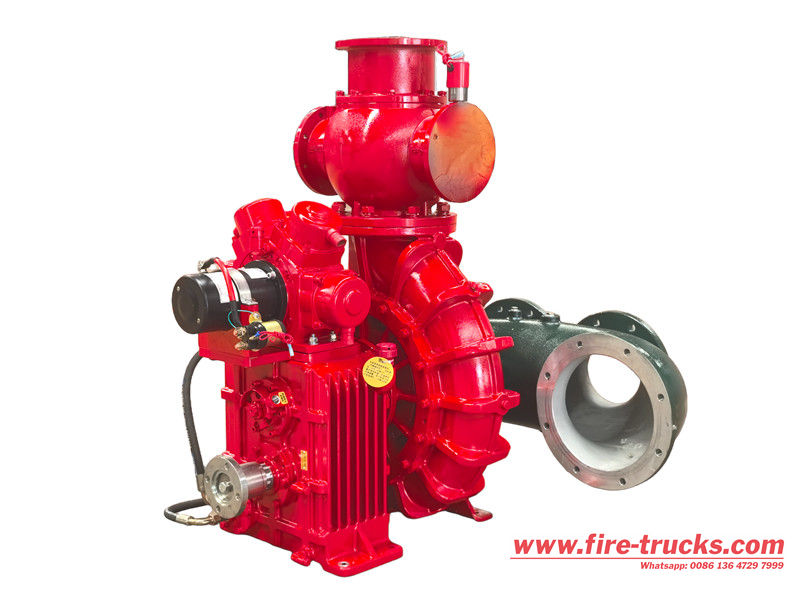
Die Schaumlöschpumpe CB10/140 ist ein weit verbreitetes, fahrzeugmontiertes oder stationäres Löschwasserversorgungssystem mit einem Nenndruck von 1,0 MPa und einer Nennfördermenge von 140 l/s. Sie deckt den grundlegenden Wasserbedarf von Löschanlagen ab. Pumpengehäuse und Laufrad bestehen aus hochwertigen, verschleißfesten Materialien und bieten Korrosionsbeständigkeit sowie Hochdruckbeständigkeit. Es verfügt über ein Zwei-Einlass-System für schnelles Umschalten der Wasserquelle und wird von einem hocheffizienten Motor oder Dieselmotor angetrieben, wodurch eine Anlaufzeit von 30 Sekunden oder weniger erreicht wird. Dank seiner kompakten Bauweise, der einfachen Wartung und des zuverlässigen Betriebs ist es ein... Schaumlöschpumpe CB10/140 ist ein unverzichtbares Ausrüstungsteil, um eine effiziente Wasserversorgung für Feuerwehreinsätze zu gewährleisten. Die LKW-montierte Niederdruck-Feuerlöschpumpe CB10/140-XZ ist eine einstufige Kreiselpumpe mit einem Pumpengehäuse aus Aluminiumlegierung und einem Laufrad aus Messing. Sie verfügt über ein elektrisches Vierkolben-Wasseransaugsystem mit elektrischer Schaltung. Die optionale Schaumpumpe CB10/20 ist mit einem pneumatischen Trennmechanismus ausgestattet. Dieses Produkt zeichnet sich durch hohe Leistung, kompakte Bauweise, einfache Bedienung und Wartungsfreundlichkeit aus. Die Feuerlöschpumpe CB10/140-XZ ist eine einstufige Kreiselpumpe für Feuerwehrfahrzeuge. Sie zeichnet sich durch ihre Zweikolben-Ansaugvorrichtung aus, die sich automatisch ein- und ausschaltet. Die Pumpe ist auf hohe Leistung bei kompakter Bauweise, einfacher Bedienung und bequemer Wartung ausgelegt. Zu den wichtigsten Spezifikationen gehören eine Fördermenge von 140 l/s und ein Auslassdruck von 1,0 MPa bei einer Nenndrehzahl von 2600 U/min. » . Funktionsprinzip der Schaumlöschpumpe CB10/140 ● Wasser- und Schaumkonzentrataufnahme: Das Wasser wird aus einer Versorgung entnommen, das Schaummittelkonzentrat aus dem Vorratstank. ● Dosierung: Der Dosierer mischt das Schaummittelkonzentrat mit dem Wasser in einem vorbestimmten Verhältnis ● Druckbeaufschlagung: Die Pumpe setzt das Gemisch unter Druck, wodurch dessen Geschwindigkeit und Druck erhöht werden ● Ausstoß: Die unter Druck stehende Schaumlösung wird durch den Ausstoßschlauch zur Düse gedrückt, wo sie auf das Feuer ausgestoßen wird ● Feuerbekämpfung: Der Schaum bedeckt die Brennstoffquelle, trennt sie vom Sauerstoff und löscht das Feuer » . Detaillierte Einführung der Schaumlöschpumpe CB10/140 1. Überlegene Konstruktion, stabile und zuverlässige Leistung: ● Die Feuerlöschpumpe CB10/140 verfügt über eine einstufige Kreiselpumpenkonstruktion und ist aus einer hochfesten Aluminiumlegierung gefertigt, was Vorteile wie geringes Gewicht, Korrosionsbeständigkeit und Hochtemperaturbeständigkeit bietet ● Die Pumpe verfügt über eine präzisionsgefertigte Innenstruktur, die einen gleichmäßigen Durchfluss und eine hervorragende hydraulische Leistung gewährleistet. Eine Gleitringdichtung verhind...
Details
Bitte lesen Sie weiter, bleiben Sie informiert, abonnieren Sie uns und wir freuen uns über Ihr Feedback.

 IPv6 -Netzwerk unterstützt

 Deutsch
 English
 français
 русский
 italiano
 español
 português
 Nederlands
 العربية
 日本語
日本語 한국의
한국의 Türkçe
 Melayu
 ไทย
ไทย Tiếng Việt
 Indonesia
  中文
中文 қазақ
қазақ Filipino
 မြန်မာ
 српски